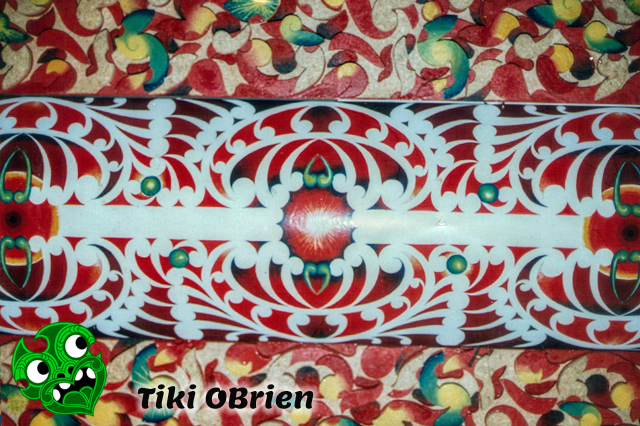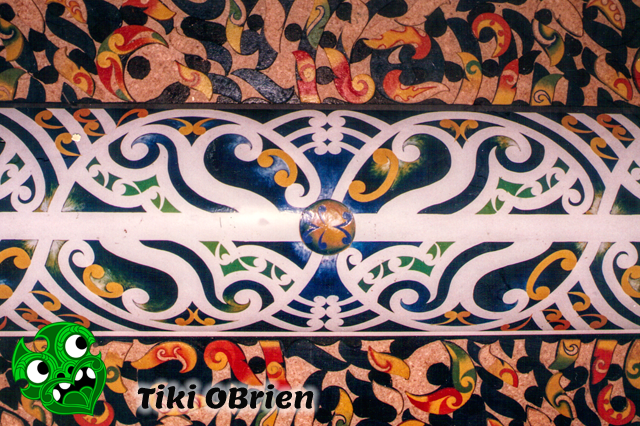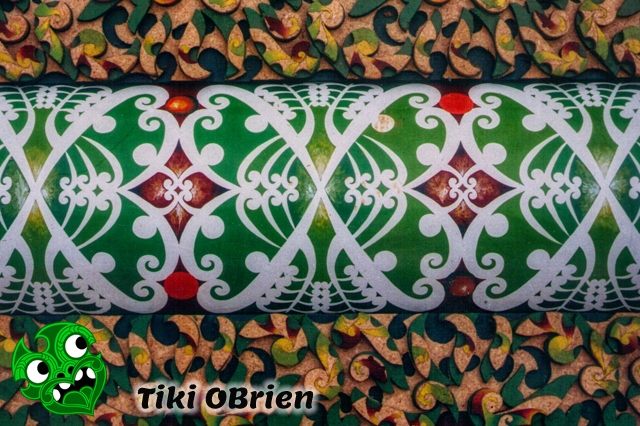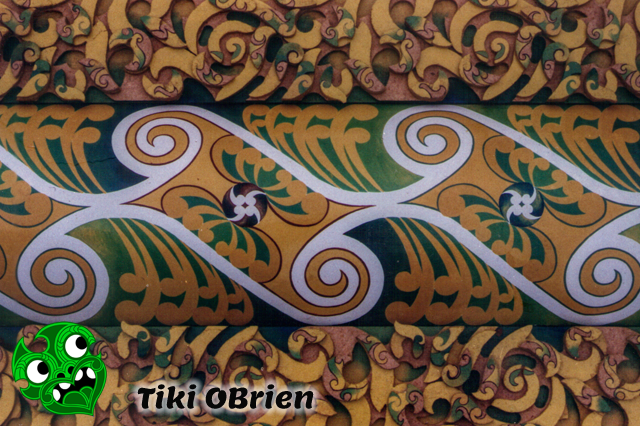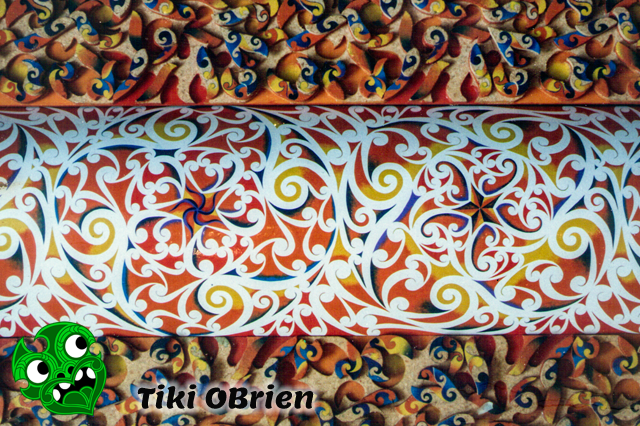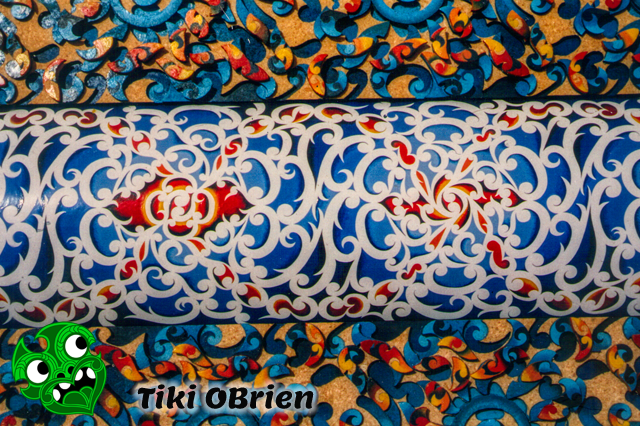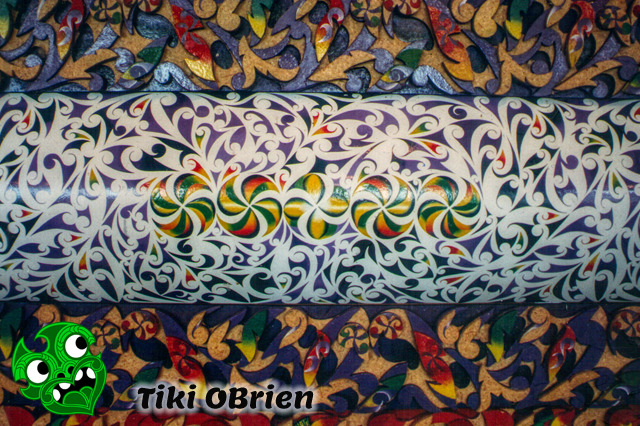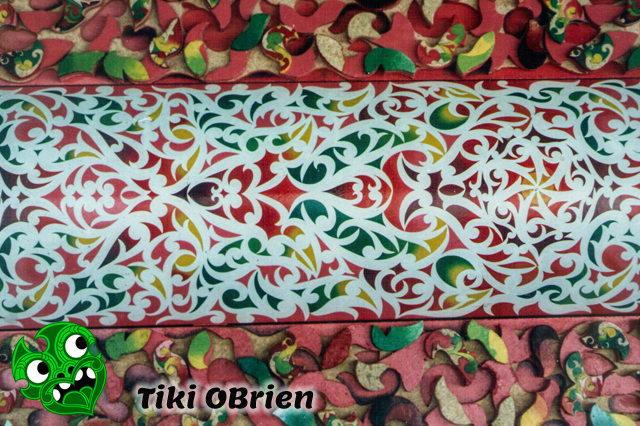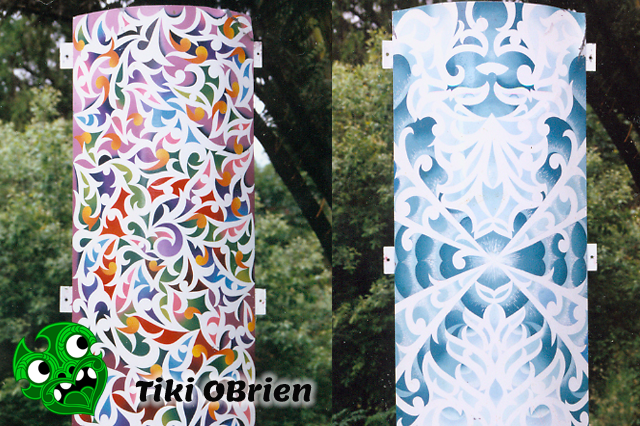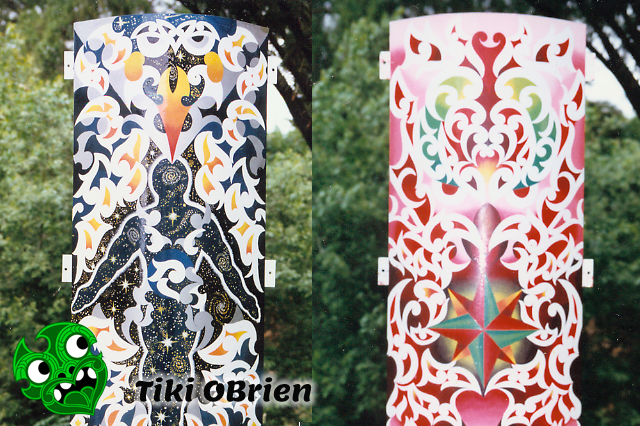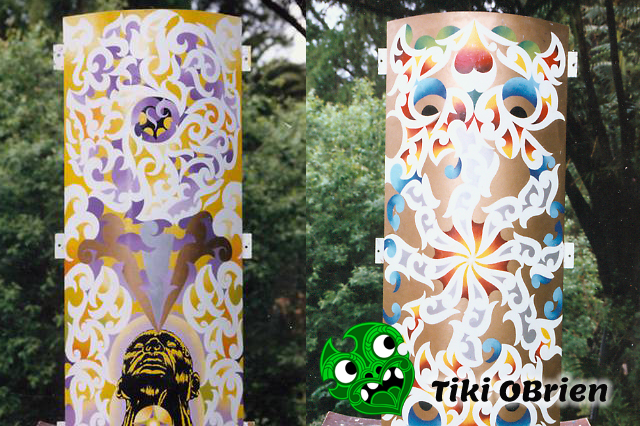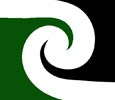
Kōwhaiwhai a traditional painted art form that sits alongside its cousins. Whakairo, carving. Tukutuku, weaving. Tā moko, the marking of identity carried upon the skin. Yet kōwhaiwhai remains one of the more elusive and misunderstood forms. Simple to look at from a distance, but deeply complex once you step inside it. From design through to application, kōwhaiwhai requires patience, balance, rhythm, and a steady hand.
Every curve carries movement. Every line must breathe properly with the surface it moves across. Many of the patterns can be traced back through older Māori forms. Seen within paddle designs, hue gourds, tā moko, and the natural rhythms observed in the world around us.
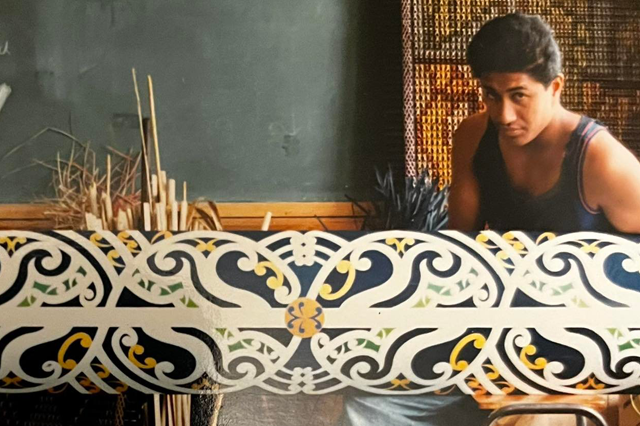
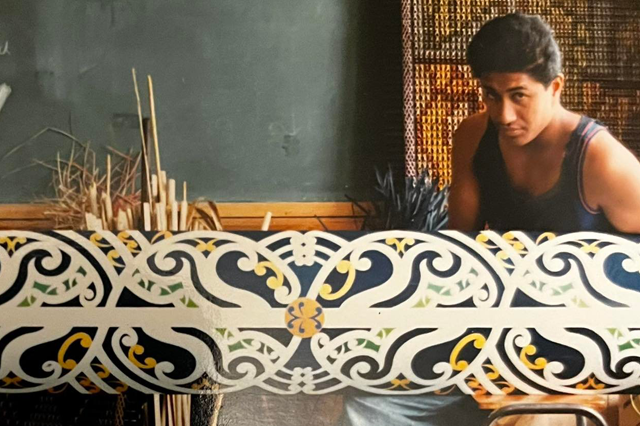
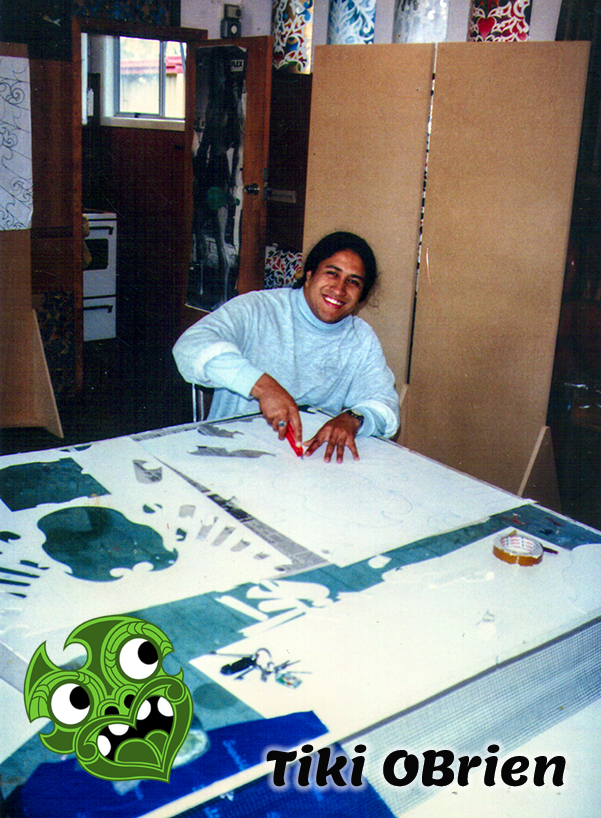
The word kōwhaiwhai is commonly associated with the painted scroll patterns carried across the heke, the rafters inside traditional wharenui throughout Aotearoa. Traditionally these patterns were painted upon timber rafters supporting the roof structure above. In the case of the kōwhaiwhai shown here, the designs were instead painted onto galvanised steel to reduce the overall ceiling weight. I designed and painted these using fine ox hair brushes in the lead up to the opening of Te Ihorangi in 1995.
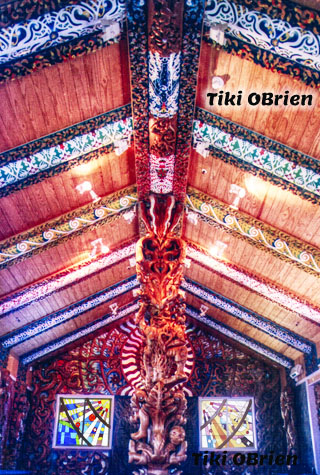
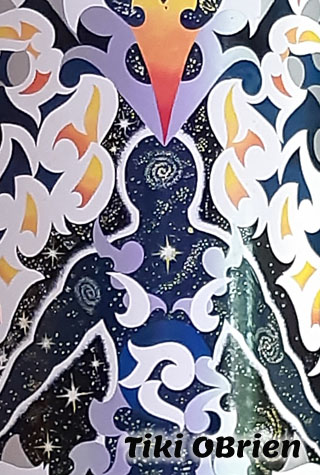
Close up detail
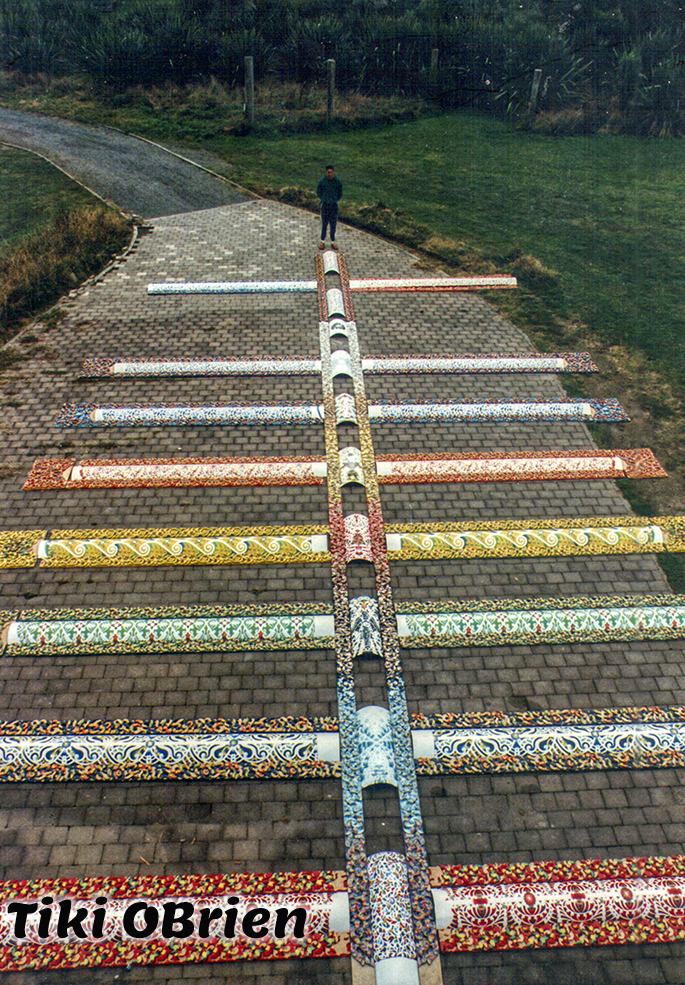
- All
- Sample- 1
- Sample- 2
- Sample- 3
- Sample- 4
- Sample- 5